Before You Go
Tracing Irish Ancestry
The trip works when the research happens before you fly and the visit is for the place itself: the townland, the graveyard, the church and the road out. This is how to find them, and who to pay to help.
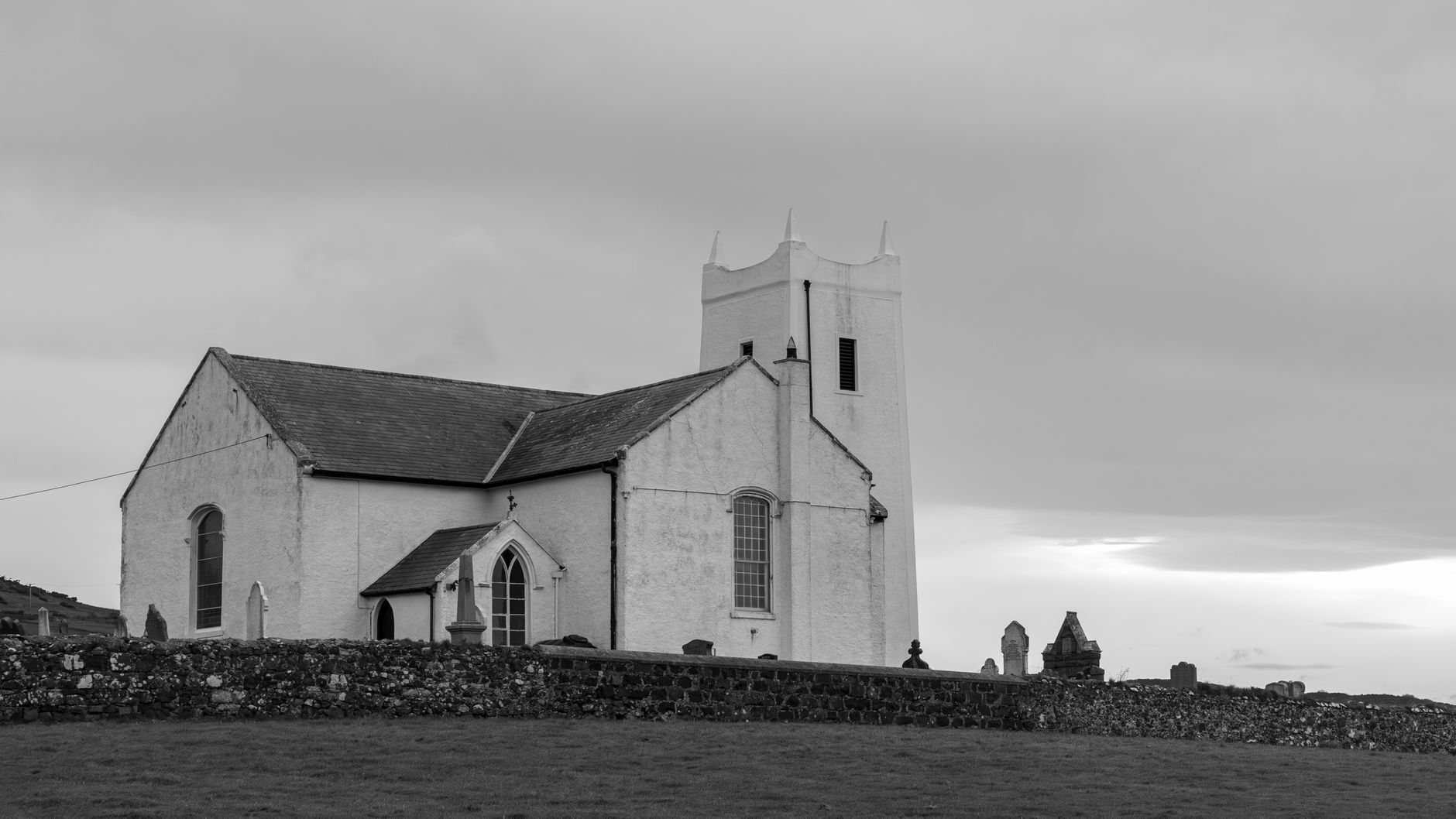
What an ancestry trip can and cannot deliver
You will almost certainly find the townland, the parish and a run of records that puts your family in a specific place in the 1850s. You will not build a complete family tree in a week, and you will not find a cottage with the family name over the door. The trip works when the research is done before you fly, and the visit is for the place itself: the road, the graveyard, the church, the view your great-great-grandmother left.
Plan the paperwork for home, and the travel for the townland.
Start with the townland, not the surname
Irish addresses are not streets outside the towns. The unit that matters is the townland — one of roughly 64,000 small divisions, some no bigger than a few fields. Griffith's Valuation, the censuses and the church registers all record people by townland and parish.
Without the townland you are searching a county for a common surname, which is hopeless. With it, you have an address you can drive to.
- 1901 and 1911 censuses are free, complete and searchable at the National Archives of Ireland. These are the only surviving full censuses, and they give the townland, the house, the family, ages and occupations.
- Griffith's Valuation (1847–1864) is free online and lists every occupier of land and buildings by townland. If your family was in Ireland before the Famine, this is where you place them.
- Tithe Applotment Books (1823–1837) do the same a generation earlier, for larger holdings only.
- Civil registration runs from 1864 for all births, deaths and Catholic marriages, and from 1845 for non-Catholic marriages. Indexes and images are free at irishgenealogy.ie.
- Catholic parish registers, mostly from the 1820s onwards with earlier fragments, are free at the National Library of Ireland. Church of Ireland registers go back further and are largely held by the Representative Church Body Library.
What is missing: nearly all pre-1901 census returns, destroyed in the Four Courts fire in 1922. Everything before 1864 depends on church records, estate papers and luck. Emigration before the Famine often leaves no paper trail in Ireland at all.
Where the records physically are
- National Archives of Ireland, Bishop Street, Dublin: census returns, valuation records, wills and much else. Free, weekdays, bring photo ID for a reader's ticket.
- National Library of Ireland, Kildare Street, Dublin: parish registers on microfilm, newspapers, manuscripts. Free, reader's ticket, some evening opening.
- General Register Office, Dublin: civil records and certificates, paid.
- PRONI, Belfast: the equivalent for Northern Ireland — valuation, tithe, will calendars, church records, estate papers. Book a reader's ticket in advance.
- GRONI for Northern Ireland civil records.
- Valuation Office and Registry of Deeds, Dublin, for property and land transactions.
Online, most of this is reachable from home: the 1901 and 1911 censuses, Griffith's, the NLI registers, irishgenealogy.ie, townlands.ie for locating a townland, and the paid church-record databases such as RootsIreland. Do that work before you book a flight; the archives are for the gaps, not the beginning.
Hire a researcher for one county
The county heritage centres and family research services are the best value in Irish genealogy. Give them a name, an approximate date, a parish and a townland, and they will work the local church registers, gravestone inscriptions and newspaper archives for a fee, typically €150 to €300, and hand you a report.
This is faster and cheaper than doing it yourself in a reading room on a two-week trip, and it is the difference between arriving with a report and arriving with a hope. Accredited genealogists, listed through the professional association, are the option if the case is complicated.
The trip itself
A realistic shape for a first ancestry trip is eight to ten days: two or three days in Dublin or Belfast at the archives and the big emigration sites, then four or five days in the county your family came from.
- Base in the nearest town to the townland, not in Dublin. The whole point is the two hours before breakfast and the walk after dinner.
- Visit the townland and drive the road slowly. The house may be a ruin, replaced by a bungalow, or gone entirely; the field boundaries and the view will not have moved.
- Walk the graveyard. Many inscriptions are transcribed on Historic Graves, so you can arrive knowing which corner to look in. Close gates, move nothing, and photograph the stone rather than the view.
- Ring the parish office, not the church door, and ask when it is convenient. Registers are kept locally and a priest or secretary will often help a visitor with a specific date; they will not research a whole family.
- Ask in the shop or the pub. Local knowledge about who was related to whom is real and generous, but it is offered in conversation, not at a front door. Do not cold-call at houses.
- Get permission before crossing private land, and never climb a wall or a ruin.
The emigration sites worth building in
- Cobh in Cork Harbour, the Queenstown of the emigrant trade, where the Cobh Heritage Centre covers the Famine sailings, the convict ships and the Titanic's last port of call. The Titanic Trail walks the same streets.
- Jeanie Johnston in Dublin, a replica of a Famine-era emigrant barque you can go aboard.
- Ulster American Folk Park outside Omagh, which follows the Ulster emigrant story from a reconstructed cottage to the American street it led to.
- Titanic Belfast for the shipyard side of the story.
- Derry, with the walls and the Museum of Free Derry, for the Plantation and the later emigrations.
EPIC, the Irish emigration museum in Dublin's docklands, is the other obvious stop if the family story is American rather than local.
The brick walls, and what they mean
- Common surnames. Kelly, Murphy, Byrne, O'Brien, Ryan. The townland is the only way through, and sometimes not even then.
- The 1922 fire. Pre-1901 censuses are gone. Substitutes are the valuations and church registers, and they rarely give ages or relationships.
- Late registers. Many Catholic parishes begin in the 1820s or 1830s, which means a family that emigrated in 1800 may be invisible.
- Spelling. Names were written by clerks, in English, from Irish. Expect O and Ó, Mc and Mac, and three versions of the same surname in one parish.
- The American letter. Family letters, photographs and the naturalisation papers in the United States often carry the parish name. Start on that side of the ocean; it is frequently better documented.
- DNA. Useful for finding living cousins who know the townland, less useful on its own: Irish matches are numerous, distant and endogamous, and a DNA estimate is not a record.
Practical notes
Archives are weekday operations and some material is offsite, so check what needs ordering ahead. Reader's tickets are issued on the day with photo ID. Copies and scans cost a few euro each. Bring a laptop, a notebook and the report you already commissioned, and wear something you can sit in for six hours.
You will need a car for the county days. If you are not driving, see Getting Around Without a Car and accept that a researcher and a hired driver will be doing the work.
Before you fly
- Find the townland and parish, and write the address down.
- Download the 1901 and 1911 census entries for the family.
- Pull the Griffith's Valuation entry for the holding.
- Commission a county report if the trail is cold.
- Book the archives day and the parish call.
- Save the graveyard transcription for the right cemetery.
Then go and stand on the road, which is the part no record can give you.
Photo: Photo: Phil Evenden / Pexels
Car hire and flights
- Car hire in IrelandCompare rental rates, with airport and town pick-up
- Flights to IrelandCompare fares into Dublin, Shannon, Cork and Belfast
Partner links: if you book through them we may earn a commission, and it has no bearing on our verdicts.
Put this to use
More in Before You Go
Build Your Trip
Turn Tracing Irish Ancestry into an itinerary
Ireland Field Guide helps you decide where to go. Travel Itinerary Co assembles the day-by-day plan.